English
 Arabic
 French
 Spanish
 Portuguese
 Deutsch
 Turkish
 Dutch
Dutch
 Italiano
 Russian
 Romaian
 Portuguese (Brazil)
 Greek
Greek

HindiShayari: A home for timeless words and modern emotion
Other |
2025-07-10 10:22:53
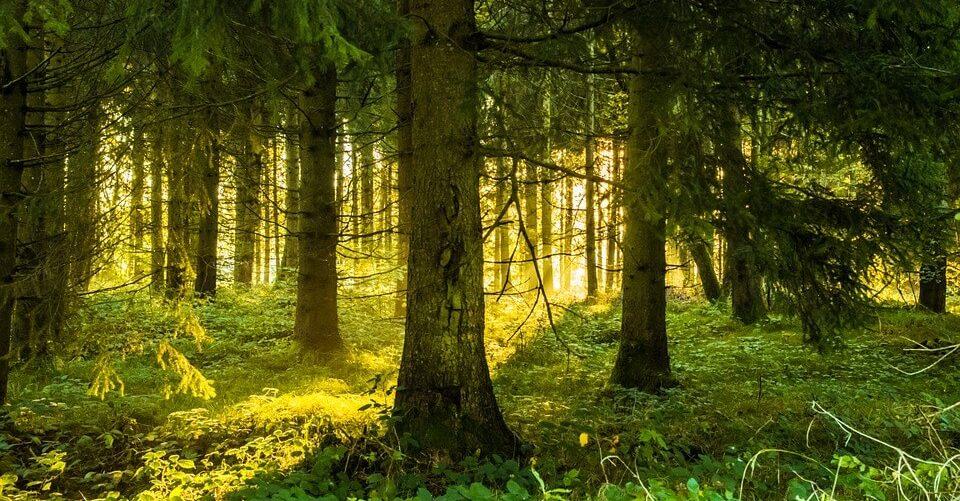
The Quran is not only a spiritual guide but also a book of reflection on the natural world. Among the many natural elements it mentions, forests and vegetation hold a significant place. These references are not merely poetic—they carry profound ecological, spiritual, and ethical meanings. In this article, we’ll explore Quranic verses that describe forests, their symbolic meanings, and the ecosystem value they offer from both a scriptural and scientific perspective.
The Quran frequently uses trees and forests to symbolize Allah’s creative might. In Surah An-Nahl (16:10–11), Allah says:
“It is He who sends down rain from the sky; from it you drink and from it [grows] the vegetation on which you send your cattle to pasture.”
This verse underlines the connection between divine provision and forest ecosystems.
Forests are presented as signs of life and continuous renewal. In Surah Ya-Sin (36:33), Allah says:
“And a sign for them is the dead earth. We have brought it to life and brought forth from it grain, and from it they eat.”
This reflects not only agricultural growth but the broader rebirth of plant life.
In various tafseers, forests are interpreted as a metaphor for divine guidance—lush, living, and full of variety. Just as forests support countless life forms, divine guidance supports the moral and spiritual life of humanity.
The Quran repeatedly mentions gardens as a reward for the righteous. These are described in Surah Al-Baqarah (2:25) and many other places as:
“Gardens beneath which rivers flow.”
This vivid image implies lush greenery and a vibrant ecosystem.
Forests in Jannah are characterized by abundant shade and fruits. Surah Al-Insan (76:14) says:
“And shade will be lowered over them, and clusters of fruit will hang low.”
This highlights both comfort and abundance, traits central to forested areas.
The forests in paradise signify a perfect, unchanging ecosystem. Unlike earthly ecosystems, the Quranic paradise is free from decay and imbalance, reflecting divine harmony.
Surah Ar-Rahman (55:7–8) says:
“And the heaven He raised and imposed the balance. That you not transgress within the balance.”
Forests play a major role in maintaining this balance by absorbing carbon, supporting biodiversity, and regulating climate.
The Quran highlights the interconnectedness of all beings. Surah Al-An’am (6:38) notes:
“There is no creature on the earth or bird that flies with its wings but they are communities like you.”
This view parallels how forests function as interconnected ecosystems.
Forests are central to the water cycle. Surah Az-Zumar (39:21) mentions:
“Do you not see that Allah sends down rain from the sky and makes it flow as springs in the earth?”
Rain nourishes vegetation, which in turn maintains ecological balance.
Surah Ar-Rum (30:41) warns:
“Corruption has appeared throughout the land and sea by what the hands of people have earned.”
Deforestation and exploitation of forests are modern manifestations of this corruption.
Surah Al-A’raf (7:31) states:
“Indeed, He likes not the extravagant.”
The verse condemns overconsumption, including that of natural resources like wood and forest land.
Surah Al-Baqarah (2:205) mentions people who “strive to cause corruption in the land and destroy crops and animals.” This reminds us that destroying forests violates our role as caretakers of the Earth.
Forests teach us about patience and growth, both physical and spiritual.
They remind us of interconnectedness, as no tree thrives in isolation.
They show how balance is essential for sustainability, mirroring the Quranic principle of mīzān.
Forests inspire humility, as they quietly serve creation with shade, oxygen, and beauty.
Forests are home to 80% of terrestrial biodiversity, echoing the Quran’s mention of diverse creatures.
They act as carbon sinks, slowing climate change—essential for environmental stewardship.
Forests support the hydrological cycle, aligning with Quranic teachings about rain and vegetation.
They help in soil preservation and air purification, vital for the health of Earth’s systems.
Leads to loss of biodiversity, going against the Quranic appreciation of diverse life forms.
Causes climate imbalance, disrupting the mīzān praised in the Quran.
Increases natural disasters, which are signs for reflection and correction.
Disrupts livelihoods and food chains, impacting both humans and animals.
Practice eco-conscious habits, like reducing paper use and supporting reforestation.
Teach Islamic environmental ethics to children and communities.
Support sustainable projects, including those focused on forest conservation.
Reflect on nature as part of daily worship, seeing trees and forests as ayat (signs) of Allah.
Forests are more than just physical landscapes—they are divine signs, ecological stabilizers, and metaphors for spiritual growth. The Quran invites us to ponder over their beauty, value, and balance. At Muhammadan Quran School, we believe in nurturing both spiritual and environmental awareness. Our online Quran classes for kids and adults are designed to build not just Quranic knowledge but a sense of moral responsibility toward Allah’s creation.